Good news.
New life.
Living hope.

We are Salisbury Baptist Church. A community of ordinary people brought together by the good news of Jesus Christ.

Join us this Sunday

321 Lillian Avenue
Salisbury, Queensland

Get directions

Sundays at Salisbury

Each Sunday, we gather to worship God, hear His Word, and encourage one another. You’ll find Christ-centred worship, faithful Bible teaching, and people of all ages.

Stay afterwards for a free espresso coffee (or cold drink) and a chance to get to know each other. Whether you’re exploring faith or looking for a church home, we’d love to meet you.

Find us at 321 Lillian Avenue, Salisbury QLD 4107. Parking is available on both sides of the church, off Lillian Avenue.

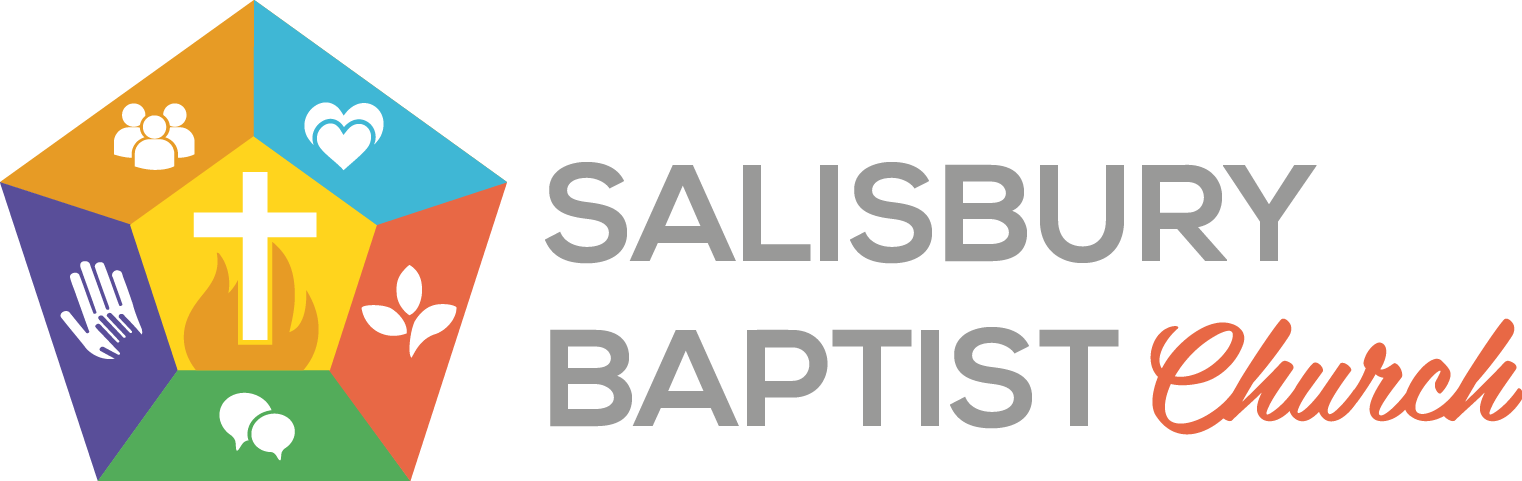
The story behind our logo

Through Jesus Christ, God offers forgiveness, new life, and a living hope. This good news is at the centre of all we do as a church.

We worship God, grow as disciples, share our faith, serve others, and care for one another as family. These are connected parts of the same life, shaped by the gospel. Our logo is a jigsaw revealing how we see the Christian church. The outer pieces represent our life together, with the gospel integral to each part.

Centred on the gospel

The cross and flame sit at the centre of our logo because the gospel is at the heart of our life together. The cross represents Christ’s sacrificial death for our sins and reminds us that forgiveness and reconciliation with God are His gifts of grace. Jesus rose again, bringing new life and a living hope. The flame represents the Holy Spirit, who gives new birth, lives within believers, and empowers us to follow Christ. Every outer piece of the jigsaw is connected to this centre: our worship, growth, witness, service, and fellowship flow from what God has done for us.

  • We trust in Jesus Christ, who died for our sins and rose again (1 Corinthians 15:3–4).
  • We receive salvation by God’s grace through faith, rather than earning it through our works (Ephesians 2:8–9).
  • We depend on the Holy Spirit for new birth and renewal (Titus 3:5–6).
  • We rely on the Spirit’s power to live for Christ and bear witness to Him (Galatians 5:22–25; Acts 1:8).
Responding in worship

Worship is represented by two hearts, one encompassing the other. This shows our hearts responding to God’s love for us, the essence of worship. The hearts also remind us that worship may include love, joy, awe, sorrow for sin, reverence, petition, anticipation, and many more feelings. Whole worship is not only in the heart, but also in soul, body, and mind.

  • We live in daily worship of God, offering ourselves as living sacrifices (Romans 12:1).
  • We worship with gratitude, recognising that we love because He first loved us (1 John 4:19).
  • We worship God with creativity, spirituality, emotions, and physical acts (Luke 10:27).
  • We join for corporate celebration on Sundays (Acts 20:7; Hebrews 10:24–25).
Growing in discipleship

Discipleship is shown as a growing plant, a process of growth in many forms. As a plant needs sun, water, and nutritious soil, we need discipleship input—the application of the gospel—from teaching, personal study, mentoring, and other sources. We value both formal and informal opportunities to grow, with special emphasis on teaching in our Sunday services.

  • We submit to the teaching of God’s Word through preaching, home groups, and discipling (Acts 20:27).
  • We sharpen and exhort one another in faith (Proverbs 27:17).
  • We grow in Christlikeness as the Holy Spirit changes us from within (1 Peter 1:15–16).
  • We follow Christ’s example by practising our faith in the world (James 1:22).
Going in mission

Evangelism is any method of communicating the gospel. Speech bubbles represent communication, and two bubbles remind us that there is no single prescribed method: Christians share as the Spirit leads. Though some believers are gifted for evangelistic ministry, we all have a voice and a testimony to speak to those who do not believe. Mission takes the gospel beyond our known personal spheres to people of other societies.

  • We willingly communicate the gospel in our community, nation, and world (Acts 1:8).
  • We eagerly share testimony of God’s work in our lives (John 4:28–29).
  • We trust the Holy Spirit to do the work of salvation (John 16:8).
Serving in ministry

The open hands in the ministry icon suggest service and care for others. Any act of service or compassion, large or small, motivated by the grace of the gospel is ministry. Every church member can be a minister, whether or not they serve in paid work.

  • We actively serve the needs of others (Philippians 2:4).
  • We use the spiritual gifts God has given us to serve Christ and His church (1 Corinthians 12:4–6).
  • We work together in the unity of the body (1 Corinthians 12:27).
Enjoying fellowship

The fellowship icon shows three people together. Their similar appearance represents how Christians in fellowship share the common bond of the gospel. We seek a sense of family that goes beyond friendship and sociability, helping one another connect on a spiritual level.

  • We meet regularly with fellow believers (Hebrews 10:24–25).
  • We are a community of openness and trust, united in purpose (Philippians 2:1–2).
  • We love and encourage one another (1 Thessalonians 5:11).
  • We view each other as family (Ephesians 2:19; 1 Timothy 5:1–2).

What we believe

The nature and unity of the Godhead

There is one God, creator of all things, infinitely perfect and eternally existing in three Persons—God the Father, God the Son, and God the Holy Spirit. These three are the same in substance, power, and glory, and unified in the Godhead, so that we worship one God.

Genesis 1:26; Deuteronomy 6:4; Matthew 3:16; Matthew 28:19; 2 Corinthians 13:14; 1 Corinthians 8:6; John 1:1, 14; Isaiah 9:6; Titus 2:13; 2 Peter 1:1; Acts 5:3–4; 2 Corinthians 3:17; Hebrews 9:14; 1 Corinthians 2:11.

The deity and humanity of Christ

Jesus Christ is the eternal Son of God who took on humanity to become the God-man at the original Christmas event. As the second Person of the Trinity, He was and continues to be eternally one with God the Father, of whose Person and glory He is the unique and accurate expression. To become human, He was conceived by the Holy Spirit and born of the Virgin Mary, so that two entire and perfect natures—the divine and the human—were united in the one Person, Jesus of Nazareth.

Isaiah 9:6; John 1:1–2, 14, 18; John 14:9; Romans 9:5; Romans 8:3; Galatians 4:4–5; Hebrews 1:3, 8, 10; 2:14–15; 4:15; 1 Timothy 2:5; Titus 2:13; 2 Peter 1:1; 1 John 1:1–3.

The Holy Spirit

The Holy Spirit, as the third Person of the Trinity, is eternally one with the Father and the Son. He is referred to in the Old Testament Scriptures as “the Spirit of God”, at times emphasising the close, personal care and power of God. In these Old Testament times, the Spirit is the communication from the Godhead, undifferentiated regarding the Persons of the Trinity, with His creation.

In the New Testament, He is called “the Holy Spirit”. There are three great steps in the work of the Spirit in this age. His first great work was the incarnation of the Son, achieved by the Holy Spirit overshadowing the womb of the Virgin Mary so that Jesus was physically born by the Spirit, bringing the eternal Son into her womb. In this unique way Jesus was “born of the Spirit”.

The second great work of the Spirit in the New Testament age was communication between the Father in Heaven and His only begotten Son on earth after our Lord was constituted as the Christ, the “anointed one”. At our Lord’s baptism in the River Jordan, Jesus was baptised by the Holy Spirit and anointed by the same Spirit from the Father for leadership as the Christ, introducing the Kingdom of God on earth. “Messiah” in Hebrew and “Christos” in Greek carry the idea of being anointed to be King. Our Lord did His ministry as the Christ, empowered by the Holy Spirit sent from the Father. The Father in Heaven brought His Kingdom down to earth by anointing His chosen ruler, Jesus of Nazareth, as the Christ.

So the Holy Spirit first acted as the Spirit of the Father communicating the Son—the “Word” or “outspeaking” of the Father—to the womb of Mary in the incarnation, and secondly as the Spirit of the Father anointing Jesus as the Messiah. Christ’s ministry was thus the very work of the Father for these two reasons.

The third great work of the Spirit, revealed by the New Testament, began with and after our Lord’s Passion and ascension to the right hand of the Father and continues today. Jesus, the God-man, was made Lord of Lords in glory and was given the Holy Spirit by the Father to send. The Holy Spirit was sent on behalf of and from the Lord Jesus to the waiting believers, parallel to how the Father sent the Spirit onto Christ at His baptism in Jordan. The exalted Lord was now the One on whose behalf the Spirit would operate on earth. The Holy Spirit’s role was to be “the Spirit of Christ”. Thus the Holy Spirit was sent by the Father and the Son from Heaven on the day of Pentecost to be the formal representative (Vicar) of Christ on earth and achieve His divine purpose in the world and through the Church. The ministry of the Spirit now is to glorify the Son and execute His Lordship on earth.

The Holy Spirit also works to convict the world of sin, righteousness, and judgement. The worst example of sin, which needs the Spirit’s conviction, is to leave Christ out of your life. The Spirit’s conviction of righteousness is about the righteousness of God, offered from heaven through belief in Christ. This gospel offer is available because He has been resurrected and lifted in His ascension to the greatest place of acceptance and justification in Heaven. The Holy Spirit also illumines the fact that all other contenders for leadership over humanity and the world, chief among them Satan, have been judged and dismissed by Christ’s victory at the cross of Calvary. The ministry of the Holy Spirit in the Church is how the Lord of the Church in Heaven continues His work through His Church on earth.

Matthew 1:18–20; 3:16; Mark 1:8; Luke 1:35; 4:1, 14; John 1:1, 33; 15:26; 16:7–25; Acts 1:5; 2:33; Romans 8:11.

The divine inspiration of the Scriptures

The Scriptures, consisting of the sixty-six books of the Old and New Testaments, are the infallible Word of God. Their verbal inspiration by the Holy Spirit has guaranteed their full inerrancy. As God-breathed, the Scriptures ensure the full truthfulness of the language of the first writers and so are without error in their original documents. These Scriptures are the full and complete revelation of His will for the salvation of people and the final divine authority on all matters that they affirm, not just faith and doctrine.

John 17:17; 2 Timothy 3:16; 2 Peter 1:21.

The sinfulness of humankind

Humankind was made in the image of God and for fellowship with Him. By transgression of God’s command, humanity fell from fellowship with God and was corrupted. The image was marred but not destroyed, and all humanity is still in the image of God. We, the human race, are like a beautiful cathedral set on a hill but bombed and scarred by sin, no longer able to reflect God’s glory and fulfil the purpose for which we were created. As a consequence of the Fall, all humans are spiritually dead, under Satan’s dominion and control, and subject to God’s wrath and condemnation. Apart from God’s grace, humankind is helpless, hopeless, and totally depraved in the sense that sin has affected every area of humanity.

Romans 3:23; Romans 5:12; Galatians 3:22; Ephesians 2:8–9.

Christ’s atonement for the sin of humanity

To redeem humankind from the guilt, penalty, and power of sin, Jesus Christ took on humanity to become the God-man and died a sacrificial death as our substitute and representative. By His resurrection, God’s acceptance of His atoning death was demonstrated and Christ’s righteousness made available to us for justification. This atonement is sufficient for the whole world but effective only in those who receive it.

Sinners are justified and reconciled to God through repentance and faith, not through personal merit, but solely on the basis of God’s gracious gift of righteousness in Jesus Christ, received through faith.

John 1:11–12; John 3:16–18; 4:42; 11:51; Acts 13:38–39; Galatians 4:4–5; 1 Timothy 2:3–6; 4:9–11; 2 Peter 2:1; 1 John 2:2; 4:14–15.

The work of the Holy Spirit in salvation

The ministry of the Holy Spirit is necessary for the initial understanding of the gospel, being drawn to Christ, and the ability to exercise a choice in accepting God’s provision of salvation. No person comes to faith in Christ and is saved on their own initiative alone. Rather, it is the sovereign grace of God that awakens people to search for God.

The Holy Spirit convinces sinners of their sinfulness, leads them to personal faith in Jesus Christ as Lord and Saviour, and brings them to spiritual new birth to become God’s children and participate in fellowship in Christ. The Holy Spirit makes the presence of Christ real in believers, witnesses to their relationship with God, leads them into all truth, bestows gifts for effective service, and produces graces for holy living and empowerment for evangelism.

John 3:3; 6:44; Acts 11:15–16; 1 Corinthians 12:13; 2 Corinthians 1:21–22; Galatians 3:2; 1 John 3:24; 4:13.

Christ’s Church

The “universal church” is the body of people whom God has separated from the world through faith in Jesus Christ as Lord and Saviour. All regenerate (born again) people are members of this universal church, which takes local form wherever groups of believers unite for worship, fellowship, and service in accordance with scriptural principles. Salisbury Baptist Church is such a local expression of the universal church.

The universal church is not tied to any denomination or human organisation. As a local expression of the universal church, Salisbury Baptist Church may affiliate with similar Bible-believing churches where this can be done without too much compromise. While feasible, we choose fellowship with the Queensland Baptist Union and balance the dangers of independence against too close a dependence on organisations or fellowships distant from the truth of the Word of God.

The Old Testament priesthood and Christian ministry

The ministries of the Old Testament priests, prophets, and kings were Spirit-anointed roles in that period, preparatory for the coming Messiah. Christ’s work has taken over these three offices, so the New Testament Church needs no further ministry other than Christ’s. Jesus is God’s one true High Priest, and His heavenly ministry comes out in two ways in the church:

  1. All New Testament believers express Christ’s heavenly Ministry. This is the “Priesthood of all Believers” and the ministry of all church members; the members of the Church are its ministers.
  2. Christ from Heaven has given the church an outworking of His leadership Ministry in the charismatically based “offices of leadership” discussed in Ephesians 2:20 and 4:11–12. This is the Ministry of the Church, which the Baptist denomination has in the past ordained.

God also calls the Church to lift individual Christians into leadership roles that are not charismatically defined but based in character and godly aspiration, as detailed in 1 Timothy 3. The intersection of the charismatically gifted ministry leadership offices of Ephesians 2 and 4 and the leadership offices of church members as part of their ministry is seen in the Bible when apostles sat with the group of elders in the first church and evangelists and pastor-teachers sit with elders in the continuing church. The church recognises this by ordaining pastor-teachers, commissioning missionaries, appointing elders and other leaders, and receiving and sending itinerant ministries following New Testament practice.

Matthew 16:18; John 15:1–8; Acts 6:1–6; 13:1–3; 14:23; 20:28; Galatians 6:2; Ephesians 4:1–16; 5:21–25; Colossians 1:18; 1 Thessalonians 5:11, 14; 2 Timothy 5:22.

The baptism of believers by immersion

Baptism is an ordinance of the Lord Jesus Christ. It is a public declaration of a person’s faith in Jesus Christ as Lord and Saviour. In accordance with New Testament Scripture, it should be administered to believers only and by total immersion, symbolising the believer’s identification with Christ in death, burial, and resurrection; the remission of sins; and the believer’s dedication to God to live and walk in newness of life.

Matthew 28:19; Mark 16:16; Acts 8:36–38; 10:46–48; 18:8; Romans 6:3–4; 1 Corinthians 12:12–13; 1 Peter 3:21.

The Communion

The Lord’s Supper, or Communion, is an ordinance instituted by the Lord Jesus Christ to be celebrated by believers with the elements of bread and wine until the end of the age. It commemorates, declares, and gives thanks for the Lord’s substitutionary death. Its celebration expresses our communion with God and the saints of all ages and our special fellowship in the Body of Christ, of which Christ is Head.

Acts 2:42; 1 Corinthians 10:16; 1 Corinthians 11:23–30.

The return of the Lord Jesus Christ

At the end of this age, according to His promise, Jesus Christ will return personally, physically, and visibly to earth in His glory. This blessed hope purifies and enlivens true Christian faith. The full consummation of the Kingdom of God awaits His return.

Matthew 24:42–44; 28:1–20; Mark 13:26–36; Luke 12:37–40; 1 Corinthians 1:7–8; 11:26; 1 Thessalonians 2:19; 3:13; 4:13–18; 5:1–11; Titus 2:13; 1 Peter 1:13; 2 Peter 3:11–12; 1 John 2:28; Revelation 3:11; 20:4–6.

The resurrection of the dead

There is to be a bodily resurrection from the dead for all people. Jesus was resurrected bodily from the grave. The believer will be resurrected to everlasting blessedness and joy in the presence of the Lord; the unbeliever to everlasting and conscious punishment. The timing of these resurrections is that Jesus was the “first fruits” on the original Easter Sunday morning; believers will be raised at the aspect of the Second Coming relevant to them; and the lost just before the final judgement at the great white throne in the Book of Revelation.

Daniel 12:2; Matthew 22:29–32; Luke 24:39; John 5:21–29; 6:39–40; Romans 3:4; 1 Corinthians 15:35–38; Revelation 20:4–6, 11–15.

Rewards and punishments in a future state

God has appointed a final judgement for the world. After that time, Jesus Christ will judge every person, and each will receive reward or punishment according to their deeds. This judgement of our works does not change that salvation is by faith; our works will declare the presence or absence of saving faith.

Every human life, without exception other than Christ Himself, is sinful and hopelessly lost. Without the righteousness of Christ graciously imputed, all are lost and headed for eternal damnation. Those judged saved by Christ, in their resurrected and glorified bodies, will receive their rewards and dwell forever with the Lord. The unrighteous will be consigned to Hell, the place of everlasting punishment.

Daniel 12:2; Matthew 13:39–43; John 3:18–20, 36; 1 Corinthians 3:10–15; Philippians 3:20–21; Revelation 14:9–13; 20:11–15.

Loading recent sermons…

Our commitment to child safety

Salisbury Baptist Church is committed to the safety and wellbeing of every child and to fulfilling the Child Safe Standards and Universal Principle set out in our Safe Ministry Policy.

The Church also seeks to promote the safety, dignity and wellbeing of Vulnerable Persons and to ensure that all people participating in the life and ministries of the Church are treated with respect, care and compassion.

We believe that every Child is created in the image of God, is known and loved by Him, and is deserving of dignity, respect, protection and care. We are committed to creating environments where Children feel safe, valued, included and able to participate fully in the life and ministries of the Church.

The Church acknowledges that safeguarding Children is both a biblical responsibility and a legal obligation. We are committed to promoting a culture in which the safety and wellbeing of Children are prioritised above organisational reputation, convenience or personal interests.

The Church is committed to:

  1. promoting the safety and wellbeing of Children;
  2. providing safe, welcoming and inclusive environments for all Children;
  3. listening to Children and taking their views, concerns and experiences seriously;
  4. respecting and supporting the diverse backgrounds, needs and circumstances of Children and their families;
  5. preventing Harm, abuse, neglect, exploitation, grooming and Reportable Conduct;
  6. responding promptly and appropriately to Child Safety Concerns;
  7. complying with applicable safeguarding, child protection and reporting obligations;
  8. recruiting, screening, training and supporting staff and volunteers appropriately;
  9. maintaining systems that promote accountability, transparency and continuous improvement; and
  10. fostering a culture in which concerns can be raised without fear of retaliation.

The Church does not tolerate child abuse, Reportable Conduct or conduct that places a Child at risk. Every concern will be taken seriously, acted on promptly and handled fairly in accordance with the law.

All persons involved in the life and ministries of the Church share responsibility for promoting the safety, wellbeing and dignity of Children and for upholding the commitments set out in this Statement.

Read the full Safe Ministry Policy

For regular attendees

Get in touch

Ask a question, plan a visit, or share something we can pray for.

(07) 3277 2944Email the church office

Sign up for E-Connected or update your contact details

Send a message

Secure form is loading.

If the form is unavailable, email the church office.

Ask for prayer

You don’t have to carry it alone. Share a prayer request with us.

Requests are emailed to accounts@salisburybaptist.org.au and treated privately. They are not shared with the prayer team.

Secure form is loading.

If the form is unavailable, email the church office.